What is tipping in crypto
Crypto-enabled tipping transforms small, spontaneous payments into on-chain transactions. Instead of relying on traditional banking rails that often ignore micro-transactions due to fixed fees, creators and contributors receive digital assets directly. This shift removes the friction of cross-border transfers and traditional intermediary costs, allowing value to move as freely as attention.
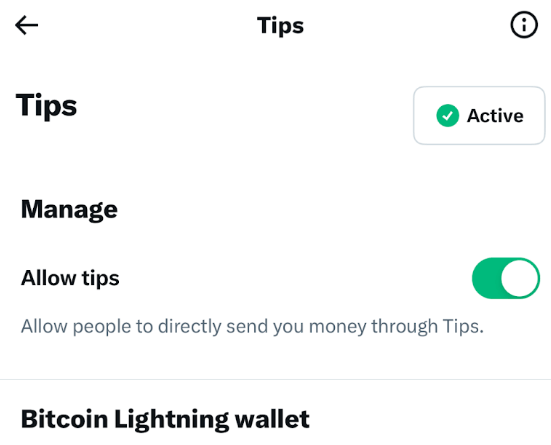
The infrastructure behind this process is straightforward but powerful. Platforms like X allow users to enable a "Tips" feature on their profiles, linking to third-party payment services. When a supporter taps the icon, they initiate a transaction off-platform via the selected provider. This could be a stablecoin transfer for predictable value or a Bitcoin payment for those prioritizing censorship-resistant settlement layers.
The core value proposition lies in the economics of scale. In fiat systems, a $5 tip might vanish into processing fees or minimum threshold requirements. In crypto, even small amounts retain their utility because the network handles the settlement. This creates a viable economy for micro-contributions, where supporters can reward niche content or quick assistance without worrying about whether the transaction makes financial sense for the recipient.
The Infrastructure Layers Behind Web3 Tipping
Choosing the right blockchain network is the first decision in building a tipping feature, and it dictates everything from transaction speed to the final cost for your users. The infrastructure you select determines whether a $1 tip feels like a seamless gesture or a frustrating ordeal involving high fees and long waits.
Layer 1 and Layer 2 Networks
Layer 1 blockchains like Ethereum provide the highest level of security and decentralization, but their base transaction costs can be prohibitive for small tips. A single transaction on Ethereum Mainnet can cost several dollars, making it impractical for micro-tipping unless the tip amount is substantial. To address this, Layer 2 scaling solutions like Arbitrum or Optimism have emerged. These networks settle transactions on Layer 1 but process them off-chain, offering significantly lower fees and faster confirmation times while maintaining Ethereum's security guarantees. For tipping platforms, Layer 2s often provide the best balance of security and cost-efficiency for ERC-20 token transfers.
Lightning Network for Bitcoin
For Bitcoin-based tipping, the Lightning Network is the standard infrastructure. As a Layer 2 solution built on top of Bitcoin, Lightning enables instant, near-zero-cost transactions. This is critical for Bitcoin tipping, where the underlying blockchain's block time and fees are too slow and expensive for small, frequent payments. Platforms like Strike have integrated Lightning Network support to allow users to tip Bitcoin instantly on social media, demonstrating how this infrastructure makes micro-transactions viable. Without Lightning, Bitcoin tipping would remain limited to larger, less frequent amounts due to the friction of on-chain confirmations.
Stablecoin Rails
Stablecoins like USDC and USDT offer a different approach by pegging their value to fiat currencies, eliminating the volatility risk associated with cryptocurrencies like Bitcoin or Ethereum. This stability is often preferred by users who want to tip without worrying about price fluctuations. Stablecoins can be sent across various networks, including Tron, Solana, and Polygon, each offering different trade-offs in terms of speed, cost, and ecosystem adoption. Tron, for example, has become a popular choice for stablecoin transfers due to its low fees and high throughput, making it a practical rail for tipping in emerging markets.

Why Infrastructure Dictates User Experience
The choice of infrastructure is not just a technical detail; it is a product decision. High fees or slow confirmations can discourage users from tipping, reducing engagement and revenue for creators. Conversely, a smooth, fast, and cheap tipping experience encourages more frequent interactions. When designing a tipping feature, prioritize infrastructure that aligns with your users' expectations for speed and cost. For example, if your audience is primarily in regions with limited access to traditional banking, stablecoins on low-fee networks like Tron or Solana might be more appropriate than Ethereum Layer 2s. Always test the user journey with real transactions to ensure the infrastructure supports a frictionless experience.
Adoption trends and platform integrations
The landscape of crypto tipping has shifted from speculative novelty to practical utility. In 2026, adoption is driven by seamless infrastructure embedded directly into the platforms where creators and developers already work. Rather than relying on external wallets for every transaction, major social and development platforms have integrated native or plugin-based tipping mechanisms that lower the barrier to entry.
X (formerly Twitter) remains a primary entry point for social tipping. The platform allows users to add links to third-party payment services directly to their profiles. When enabled, a "Tips" icon appears on user profiles, allowing supporters to send money or Bitcoin off-platform via integrated providers like Stripe or Coinbase. This integration keeps the transaction flow within the familiar social media interface, reducing friction for casual supporters.
In developer and community spaces, the approach is more decentralized. Platforms like Discourse utilize open-source plugins, such as the cryptocurrency tip system, which integrates directly with MetaMask. This allows users to transfer ETH or ERC20 tokens to other community members without leaving the forum. Similarly, tools like tip.md enable developers to add multi-chain tipping buttons (supporting Ethereum, Solana, and Bitcoin) directly into markdown documentation, turning static code repositories into active support channels.
Platform comparison
The following table compares the primary infrastructure options for crypto tipping across social and technical platforms.
| Platform | Integration Type | Supported Assets | Ease of Setup |
|---|---|---|---|
| X (Twitter) | Native Profile Link | USD, Bitcoin | Low (Third-party provider) |
| Discourse | Open-source Plugin | ETH, ERC20 | Medium (Technical) |
| GitHub/Docs | Markdown Button | Multi-chain (BTC, ETH, SOL) | Low (Copy-paste code) |
Market data and infrastructure costs
While adoption is growing, the cost structure remains a critical factor for both creators and platforms. Unlike fiat payment processors that charge percentage-based fees, crypto tipping often involves fixed network gas fees or lower percentage-based platform fees, depending on the blockchain used. This makes micro-tipping more viable on Layer 2 networks or high-throughput chains like Solana.
For real-time market context, the volatility of underlying assets like Bitcoin can impact the fiat value of tips received. Monitoring live market data helps creators understand the real-time value of their incoming transactions.
Set up your tipping infrastructure
Turning on crypto tipping is less about picking a wallet and more about choosing the right rails for your audience. If you are on X, the official Tips feature lets you link third-party payment services directly to your profile. This is the lowest-friction path for most creators because it requires zero code and leverages existing platform trust. For independent websites or newsletters, tools like tip.md allow you to embed multi-chain buttons via simple markdown, supporting Ethereum, Solana, and Bitcoin simultaneously.
The choice of asset dictates the user experience. Bitcoin Lightning Network payments are nearly instant and cost fractions of a cent, making them ideal for small, frequent tips. Ethereum or Solana are better for larger transfers where the network fees are negligible relative to the tip size. Avoid assets with high gas fees or slow finality unless your audience specifically demands them. The goal is to remove every possible barrier between the fan and the payment.
You should also consider the "off-ramp" strategy. Will you hold the crypto, or convert it to fiat immediately? Holding requires active portfolio management and exposes you to volatility. Converting immediately via a regulated exchange or payment processor simplifies your accounting but may incur higher fees. Many creators use a hybrid approach: holding a small "treasury" of stablecoins or major caps while converting the rest to fiat for living expenses.
Communicate value and handle compliance
Tipping is a social signal, not just a transaction. Your community needs to understand why their support matters. Be explicit about what the tips fund: new content, server costs, or future projects. Transparency builds trust and encourages recurring support. On platforms like X, your tip link is often the first thing a new follower sees; make sure your bio clearly explains the benefit of supporting you.
Compliance is non-negotiable. In most jurisdictions, receiving crypto tips is considered taxable income. You must track every transaction, including the fair market value in your local currency at the time of receipt. Consult a tax professional familiar with digital assets to set up proper bookkeeping. Ignoring these obligations can lead to significant penalties. Use automated crypto tax software to aggregate transactions from multiple chains and exchanges, ensuring you have a clear audit trail for tax season.
Choose the blockchain that matches your audience's behavior. Use Lightning for micro-tips on social media, and Ethereum or Solana for larger, less frequent support. Test the transaction speed and cost yourself before going live.
Add your tip link to your X profile, website header, or newsletter footer. Ensure the link leads to a trusted, secure payment processor. Verify that the transaction confirmation is visible to the sender to reduce support requests.
Connect your wallet addresses to a crypto tax software immediately. Configure it to import transactions from all relevant chains. Review the data monthly to ensure your income is accurately recorded in fiat value.
| Feature | Lightning Network | Ethereum L1 |
|---|---|---|
| Speed | Instant | Minutes |
| Cost | < $0.01 | $1-$10+ |
| Best For | Micro-tips, social media | Large transfers, NFTs |
Risks and compliance considerations
Crypto tipping introduces volatility and regulatory complexity that fiat transactions simply don't have. Because digital assets fluctuate rapidly, the value of a tip can shift significantly between the moment it's sent and when the recipient converts it to fiat. This isn't just a theoretical concern; it affects the real-world purchasing power of the tip itself.
Regulatory frameworks for cryptocurrency are still evolving, particularly regarding tipping services and cross-border transfers. What constitutes a compliant transaction in one jurisdiction might be flagged as money laundering in another. You need to verify that your chosen platform adheres to local laws and anti-money laundering (AML) standards.
To manage these risks, consider using a live price widget to monitor the asset's stability before initiating a tip. This helps you gauge the current market sentiment and avoid tipping during extreme volatility.
No comments yet. Be the first to share your thoughts!